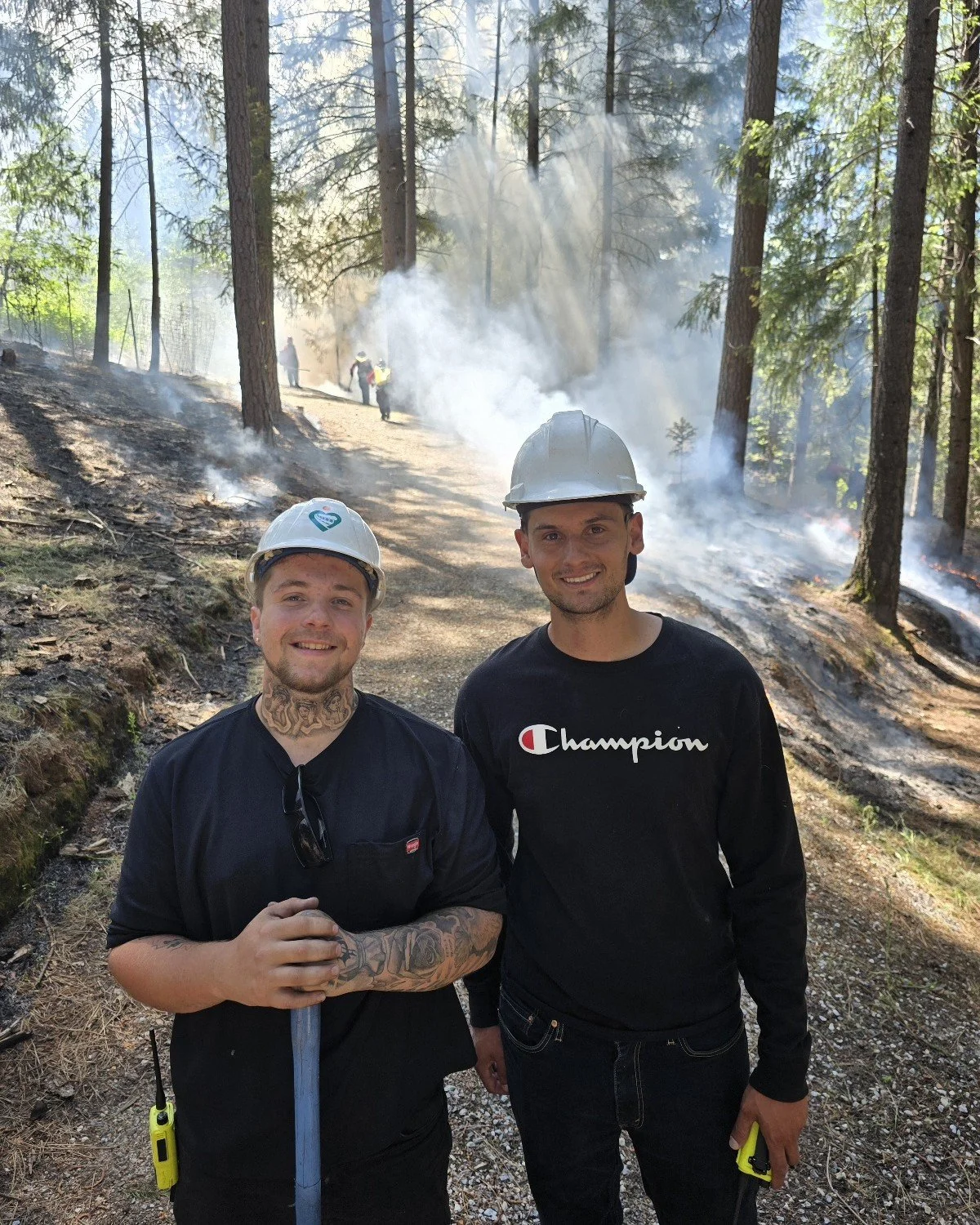
About Prescribed Fire
Prescribed fire, also known as controlled burning, offers important benefits to ecosystems and human communities when conducted under carefully planned conditions. Key benefits include:
Wildfire Risk Reduction: prescribed fire reduces the buildup of flammable vegetation (fuel) in forests, grasslands, and brushlands. By burning off accumulated dead vegetation and understory growth in a controlled manner, prescribed fire decreases the likelihood of intense wildfires that can threaten lives, property, and natural habitats. It creates firebreaks and reduces the overall fuel load, making it easier for firefighters to manage wildfires.
Cultural and Historical Significance: Many of California’s plant communities are adapted to fire. Fire has been used for thousands of years by people around the world, including the indigenous people of California, as a tool for land stewardship. Prescribed fire continues to be an important cultural practice for many Tribes and Communities, preserving traditional ecological knowledge and fostering cultural continuity.
Ecosystem Health and Habitat Improvement: Many ecosystems, such as oak savannas and mixed conifer forests, have evolved with fire as a part of their ecology. Before fire suppression was practiced on the landscape, fires that were ignited naturally by lightning would burn, unsuppressed, at relatively low intensity, maintaining the landscape in a fire-adapted state. Prescribed fire restores these fire regimes, promoting the health and biodiversity of these ecosystems, while stimulating the germination of certain plant species, clearing out invasive plants, and promoting the growth of native vegetation that is adapted to fire.